ASOBI
ROLE
Graduate Thesis
TIMELINE
12 Weeks
DELIVERABLE
Functional Prototype


The Modern Toy Industry
Progressive Design
By designing a product or system in a way that allows the user to dictate the scope of play and manipulate the world around them, toys can take on a new, more sustainable life, breaking down existing standards and limitations of the toy industry through productive play.


The first of these systems (above) is inspired by the functionality of a popular construction toy called Lincoln Logs. Based on the assembly methods of log cabins, Lincoln Logs used a basic slotting technique to assemble simple and recognizable structures. An early model of the first system showed promise in vertical construction and prompted a need to think laterally, hence the connector pieces.

The second of these systems (below) incorporated a more abstract and three dimensional element largely in part due to the geometric forms. Early versions of this system sought to utilize a sliding attachment method via a male/female interference fit, but by happy accident the same pieces allowed for a snapping mechanic. The snapping turned out to be simpler for assembly and, in large part due to the great sound that it would make, significantly more satisfying.


Putting It All Together


Further play testing with an older age group presented a few areas of difficulty and highlighted several annoyances in the existing pieces. The first of these were acknowledgements that there needed to be a more defined relationship between each piece in all dimensions. The single unit could be broken into three smaller pieces that enable a more regimented ratio between the existing catalog. Upon creating the single short component, there was a natural shift towards creating variations of the original units as compressed versions as seen below.


The addition of these compressed forms rounded out the part catalog with 9 total components that established a robust system of construction. Each unit offers unique building opportunities, encouraging intentional play in a system that promotes creative exploration and physically safe risk taking.

Following the Waldorf principle of increasing complexity with age, it made sense to create a simplified version of the catalog that allows younger children to eventually age up into the current system.
Rather than oversimplifying the core concept, the logical step was to reduce cognitive load by lowering the fine motor skills required during assembly. Scaling the pieces up to 4x their original size achieves this while maintaining the proportional relationships of the design. This larger footprint expands the product beyond a handheld toy into dynamic applications like toddler furniture, bed frames, or self-constructed figures. For ages 1 to 5, the scaled-up modules serve as a world-building tool that helps children understand their environment, creating a natural pathway toward the smaller, more complex system rated for ages 4+. The primary challenge then becomes bridging the transition between the two scales.


Branding
The shell packaging design left significant space for graphics and branding on the exterior. While it would be easy to directly print graphics onto the shell itself, having any distracting imagery or text would detract from the usability of the packaging into the larger construction system.


Packaging
Integrating this construction logo into the wrapped packaging showcased the possibilities enabled by the product itself. To further highlight the functionality of Asobi, the wrap indicates the potential for creating a pivoting mechanism along the corners of the wrap, helping to physically turn the corner on the packaging. The orthographic views of each face of the shell incorporate the established color scheme and branding of the product while not engaging in overwhelming visual distractions.


Combining both the wrap and the shell packaging creates an intriguing visual identity for the brand and the product itself, see Figure 14. Sitting on the shelf the product stands apart from other construction toys not only in the form but in the functionality of the packaging as a broader piece in the large scale system.


User Testing
At Imagine RIT, an innovation fair at Rochester Institute of Technology, 130 children ranging from 1 to 16 engaged with Asobi in an open play testing environment. Both children and their parents were encouraged to participate in playing with the original scale Asobi system which resulted in a variety of insights into the success of the product.
130
PARTICIPANTS Ages 1-16
18.5 min
avg playtime per child
15 piece
AVG per build
<30 sec
Avg time before assembling two pieces
Throughout the day in which Asobi was tested, users showed minimal barriers to play in that it took an average of 30 seconds to assemble the first two pieces and no children became frustrated from having difficulty building. This play session resulted in an average play time of 18.5 minutes per child, a metric that suggests meaningful stimulation despite a fast-paced and highly distracting environment like a fair.


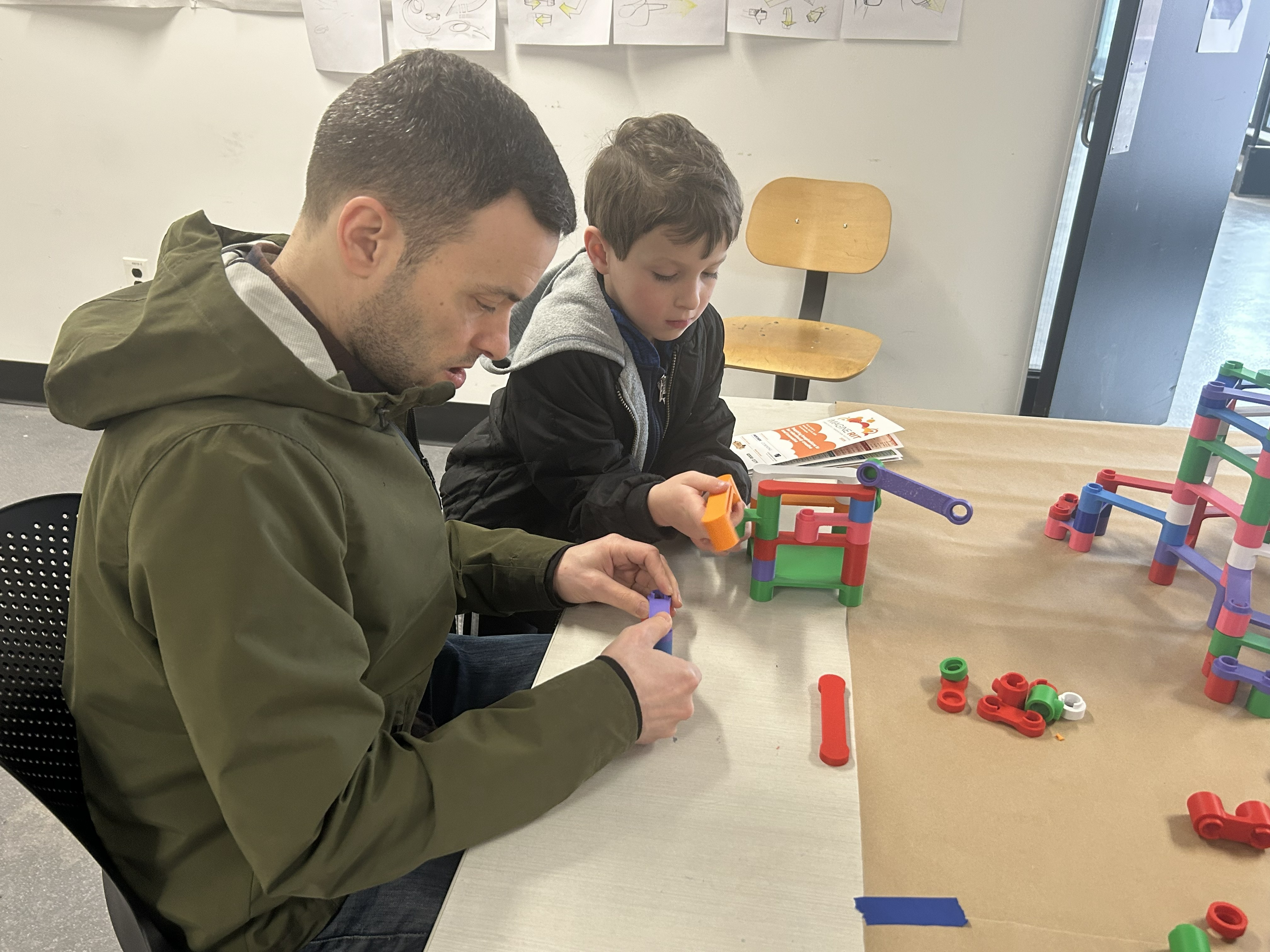
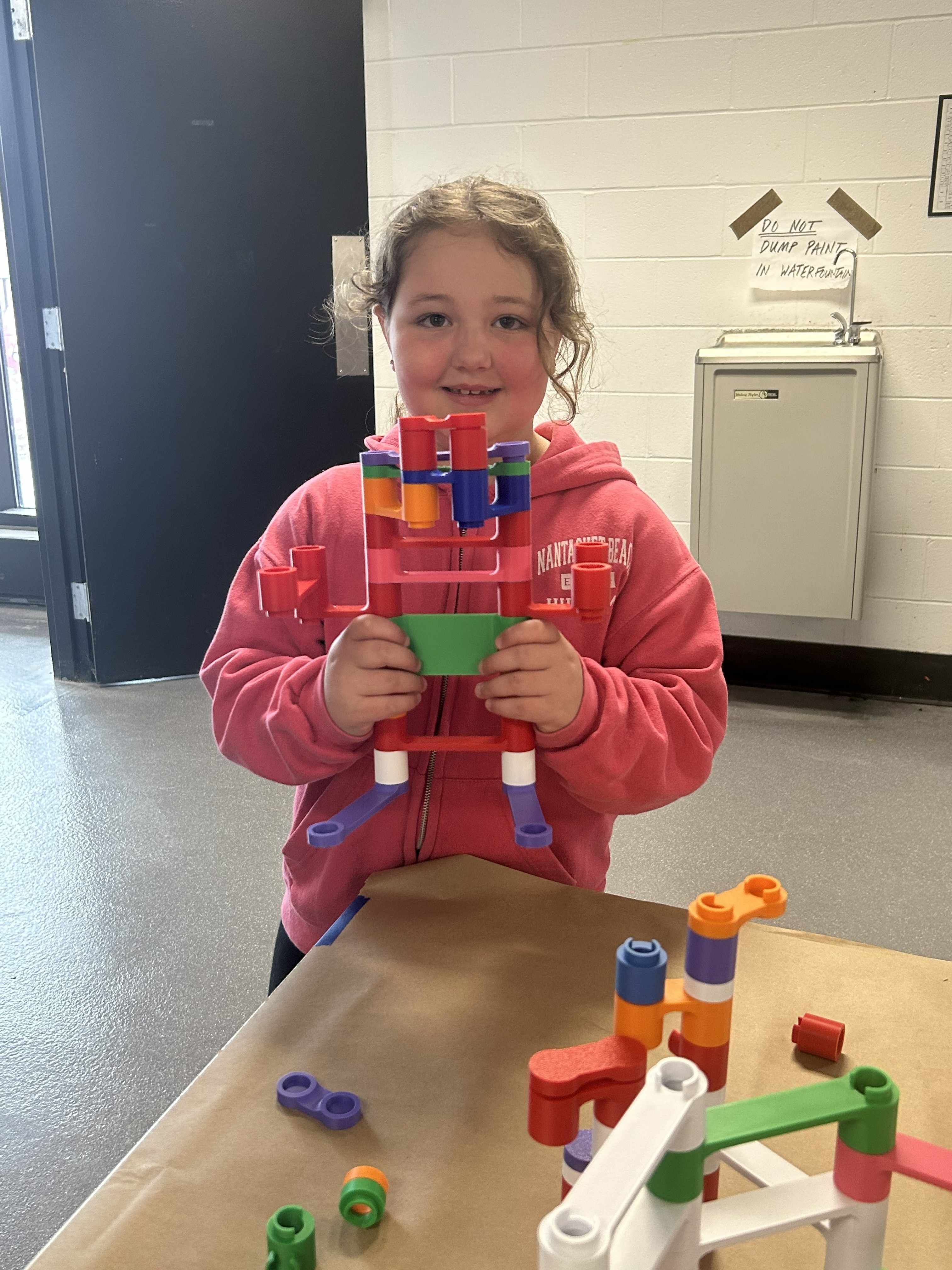

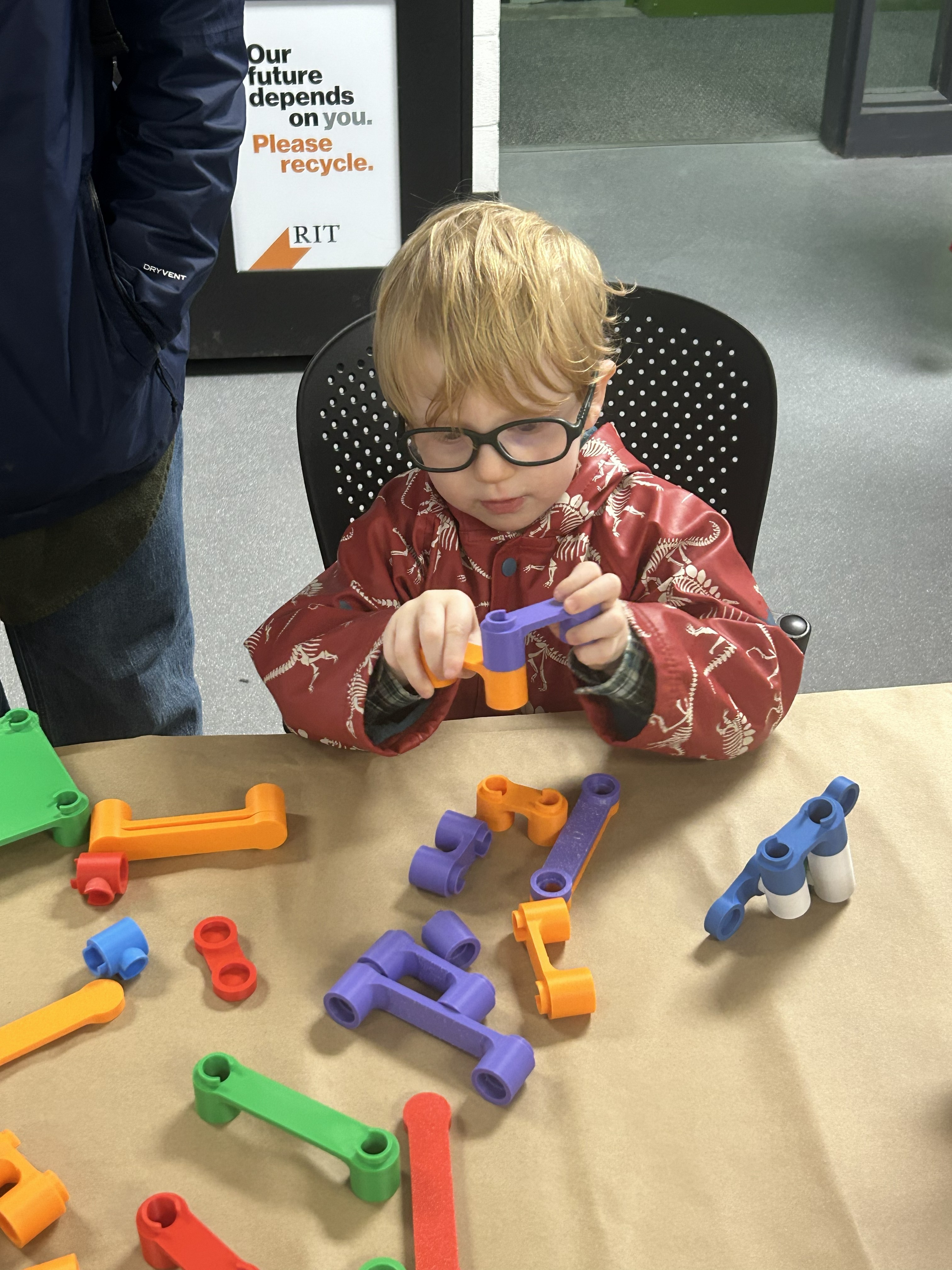

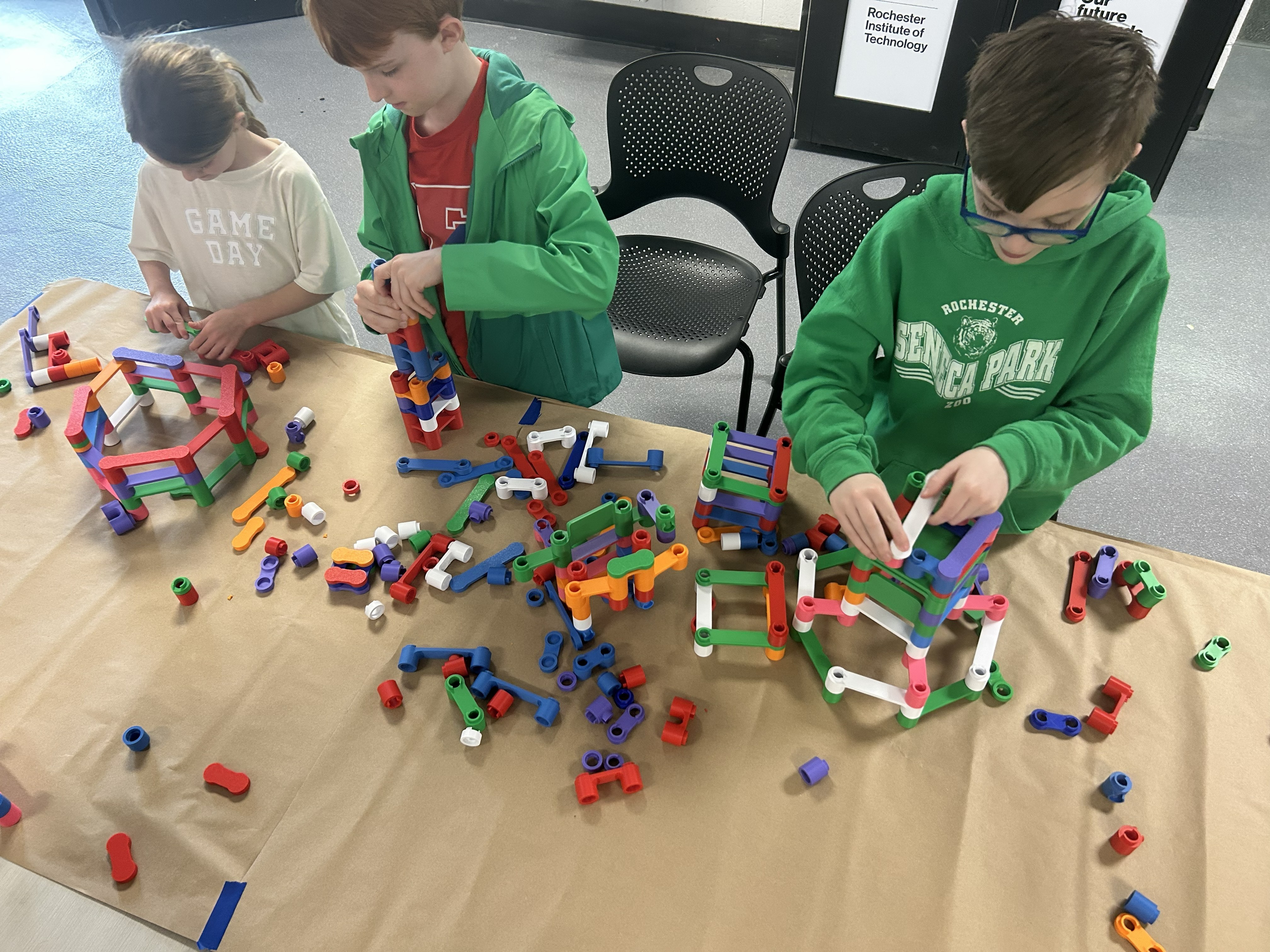

While each child had their own vision for Asobi, the average build required the use of 15 or more pieces, suggesting a need for kits that store more than the current 27 units. Figure 18 showcases several of the assemblies produced on the day, ranging from structures and anthropomorphic creatures to abstract interpretations of pieces. Every construction was unique in both its intent, the end result, and the process by which it was created. Every child that engaged with Asobi asked to have their project saved and not disassembled, suggesting a level of attachment that would draw them back to the toy again. With each of the statistics observed from this play testing opportunity, Asobi showcased potential, directly in line with the goals of the design intent and the research conducted.
